
در آستانه ی کنفرانس تهران در سال ۱۳۲۲ شمسی (۱۹۴۳ میلادی) وزارت اطلاعات انگلستان مجموعه ای از پنج کارت پستال تبلیغاتی بر ضد نیروهای محور در ایران منتشر کرد.
تصویرگر این کارت پستال های تبلیغاتی طراحی بریتانیایی و فیلیپینی الاصل بود به نام کیمون اوان مارنگو مشهور به «کیم» (۱۹۸۸-۱۹۰۷) که کوشش کرده بود تا حد امکان سبک تصویرگری خود را در این کارت ها به شیوه ی مینیاتور ایرانی نزدیک کند. موضوع تصاویر پنج صحنه از شاهنامه بود که در آن ها نبرد میان متفقین و نیروهای محور به داستان ضحاک و فریدون مانند می شد.
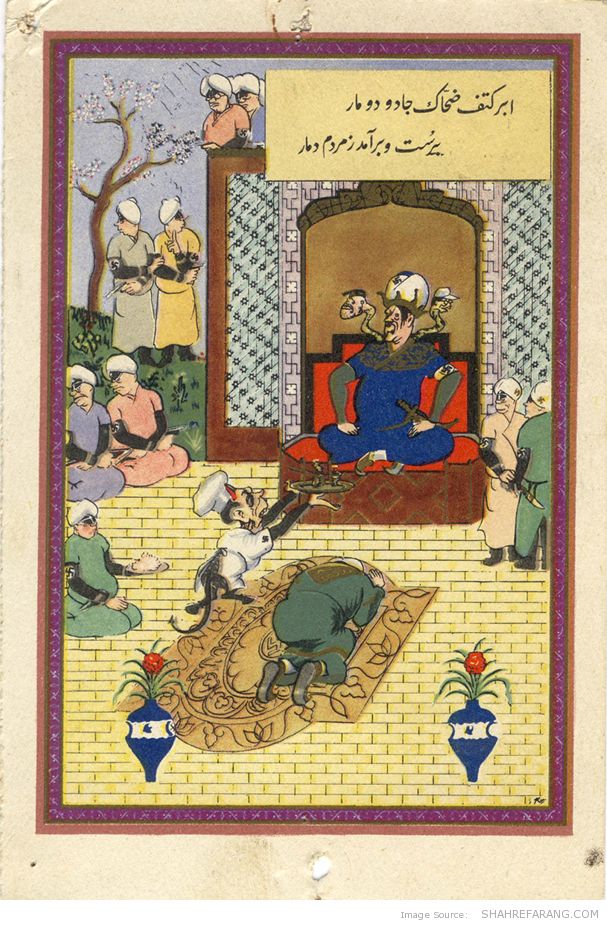
هیتلر در لباس ضحاک بر تخت نشسته است. موسولینی و هیروهیتو مارهای دو کتف او هستند و گوبلز در هیئت آشپزی از او پذیرایی می کند
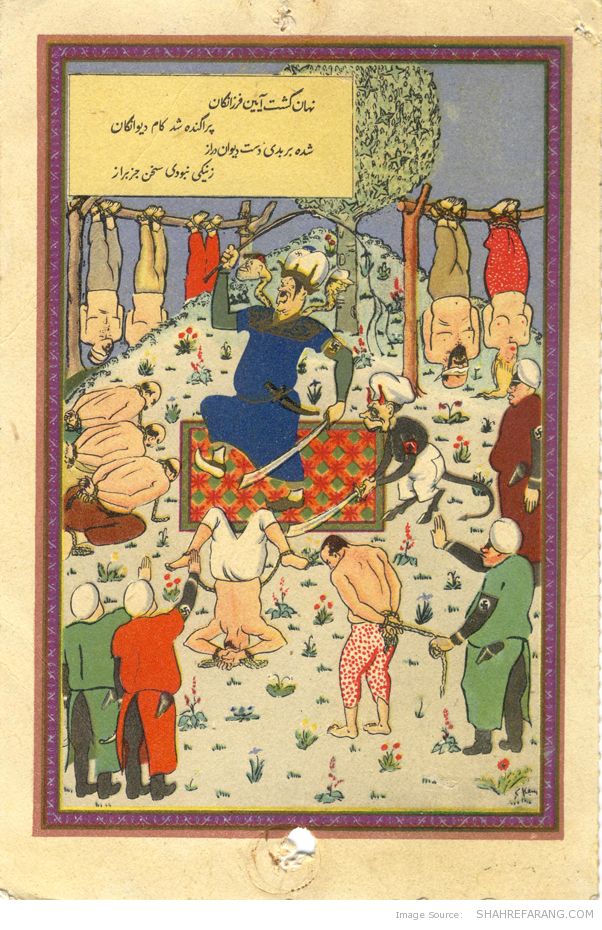
هیتلر-ضحاک، سرمست از قتل عام و بیدادگری
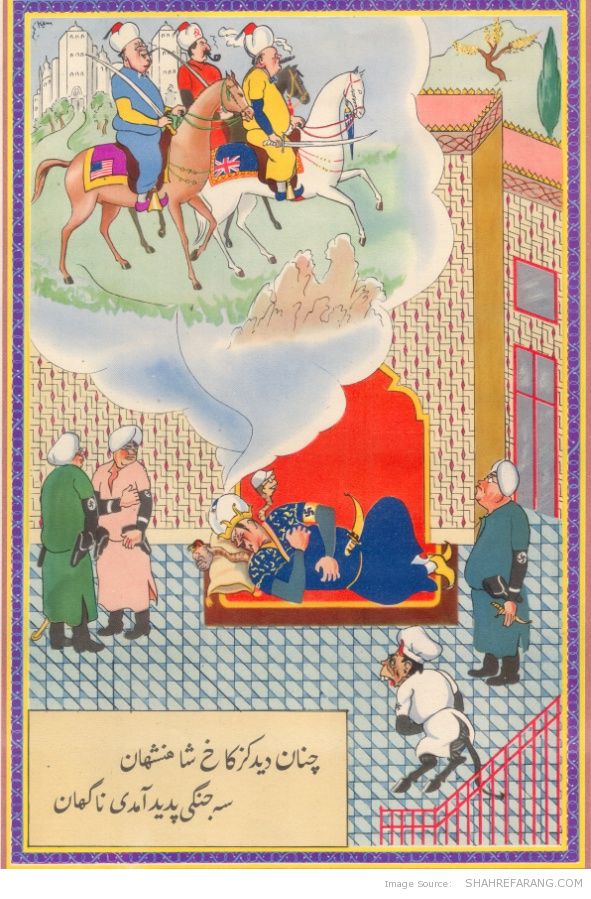
هیتلر در کابوسی سه مرد جنگی (چرچیل، استالین، و روزولت) را می بیند که او را از تخت به زیر می کشند
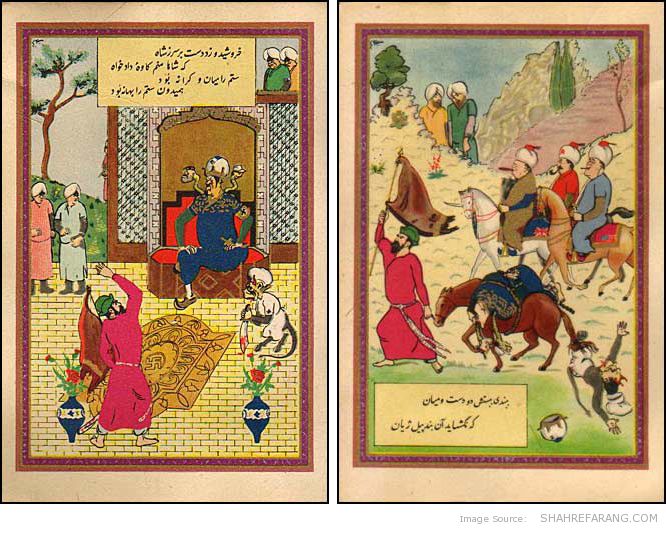
تصویر سمت چپ: اعتراض کاوه به هیتلر - تصویر سمت راست: پیروزی سه مرد جنگی (چرچیل، روزولت، و استالین) بر ضحاک (هیتلر)
✤ Also available in: English
سواستفاده از ادبیات! همه اش همین!
تصویرگر هنرمندی بوده،جایگزینی کاراکترا و انتخاب داستان همینطور تصویرسازیاش خیلی خوبن.
با توجه به روابط بسیار نزدیک ایران و آلمان، اگر متحدین پیروز می شدند شاید وضع ایران خیلی بهتر می شد
شاید اگر نیرو های المان تونسته بودن شوروی بگیرن و حکمت وقت ایران تونسته بود ۲۴ ساعت جلو پیش روی متفقین بگیره دیگه روسیه ای نوبد که خون ملت ایران بخوره و تاریخ خاور میانه چیز دیگه ای بود
جالبه چون از نظر ایدئولوژیک با کمونیست ها مشکل داشتن ونمی خواستن تبلیغی برای اونا بشه استالینو عقبتر می کشیدن تا پرچم شوروی رو که یک نماد ایدئولوژیک هم هست نشون ندن.
پس از پیروزی قوای کمپانی هند شزقی بر تیپو سلطان مدالی ضرب گردید که بر آن نبرد شیری و ببری منقوش گردیده و بر بالای آن نبشته شده است:
اسدالله الغالب!
شیر در کنار اسب شاخدار یکی از نشانه های بریتانیای کبیر است و تیپوسلطان ببر را در پرچم خود نشان کرده بود و با این حساب پیروزی شیر بر ببر نشان دهنده قدرت نمایی کمپانی هند شرقی می باشد.
باید آفرین گفت به کارکنان باهوش کمپانی که حتی فکر یافتن اسدالله الغالب را هم نموده بودند.
یک چنین ملتی و دولتی شایسته فرمانفرمایی بر جهان می باشند.
خودمان را فریب ندهیم
پیشاپیش از غلط های زیاد در واژه ها پ.زش می خواهم
دقیقا همیجوریه من هم با شما همعقیده هستم هموطن البته حمل بر فیلو انگلو بازی او اینجور حرفها نباشه که سرآخر محکوم بشیم به حکم ازلی آل احمد و غربزده اطلاق ÷یدا کنیم به دست جزم اندیشان اما همینه و واقعا از ماست که بر ماست لطفا تقصیرات رو گردن عاملی دیگه نندازیم
فدوی همه هموطنان آزاد اندیش مخلص افسری